
Event Support: Master Seamless Webinars, Summits & Conferences
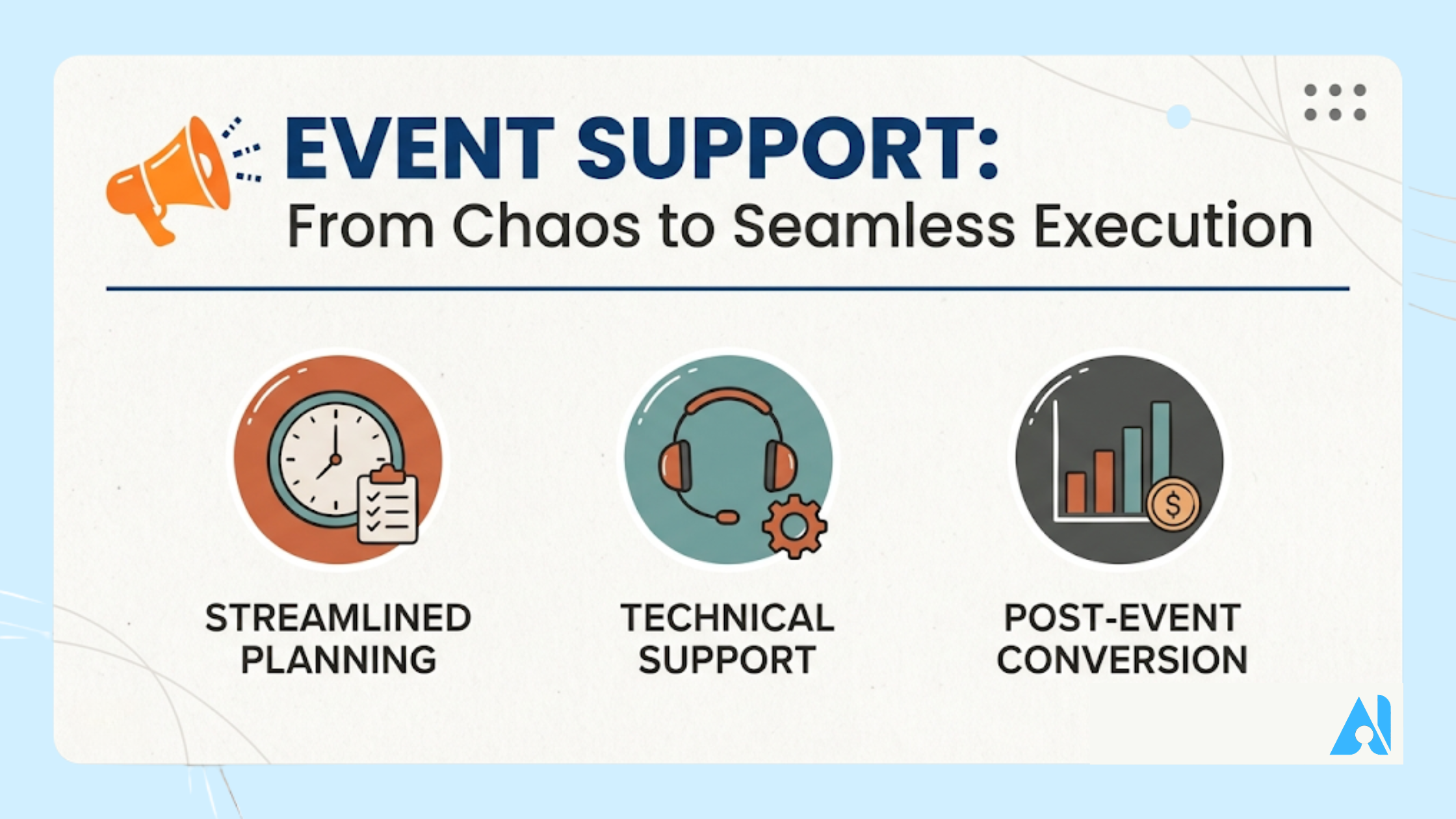
Event Support: From Chaos to Seamless Execution
Planning an event—whether it’s a high-stakes digital summit, a technical webinar, or a multi-day hybrid conference—often feels like trying to assemble a puzzle while the pieces are still being printed. For business owners, events are powerful engines for lead generation, brand authority, and community building. However, without a structured approach, they can quickly transform from a strategic asset into a logistical nightmare that drains your team's energy and your company’s resources.
The difference between a "chaotic" event and a "seamless" one isn't just luck; it’s the systems and support structures behind the scenes. This guide breaks down the essential phases of event management to help you scale your impact without losing your mind.
1. The Strategy Phase: Moving Beyond "Let’s Just Do It"
Most event chaos stems from a lack of clarity in the first 10% of the planning process. Business owners often jump straight to picking a date or a platform before defining the "Why."
Defining Your North Star
Before choosing between Zoom Events, Airmeet, or a physical ballroom, define your primary KPI:
Lead Generation: Focus on high-volume registration and robust follow-up sequences.
Thought Leadership: Prioritize high-production quality and "big name" speakers.
Customer Retention: Focus on interactive workshops and networking opportunities.
The Power of Data-Driven Planning
According to recent industry benchmarks, roughly 50% of people who register for a free webinar will not show up. If your goal is a live audience of 500, you need at least 1,000 registrants. Knowing these numbers early allows you to adjust your ad spend and outreach strategy before the "chaos" of under-performance hits a week before the event.
2. Pre-Event Logistics: Building the Infrastructure
The "Seamless Execution" phase is won or lost in the six weeks leading up to the event. For a business owner, your role should be vision and high-level oversight—not troubleshooting why a registration link is broken.
The Tech Stack Audit
A common pitfall is using too many disconnected tools. A seamless flow requires integration between:
Registration: (e.g., HubSpot, Eventbrite, or your website).
Communication: Email automation for reminders (24 hours, 1 hour, and 15 minutes before start).
Delivery: The actual platform where the event lives.
Speaker and Talent Management
Speakers are the "product" of your event, but they are also busy professionals. Chaos occurs when speakers are tech-illiterate or miss deadlines.
The "Speaker Kit": Provide a one-sheet with technical requirements (lighting, mic, background) and pre-written social media swipes.
The Tech Run: Mandatory 15-minute tech checks 48 hours prior are non-negotiable. This prevents the "I can't share my screen" panic that kills event momentum.
3. During the Event: The Command Center
When the "Go Live" button is pressed, the business owner should be focused on engaging with the audience or delivering their keynote—not moderating comments or fixing audio loops.
Roles You Need (Even for Small Webinars)
The Technical Producer: Manages the "backstage," transitions slides, and handles recording.
The Chat Moderator: Bridges the gap between the speaker and the audience, seeds questions, and handles trolls or technical complaints.
The Customer Success Lead: Monitors an "Emergency Email" or help desk for attendees who can’t log in.
Managing the "Chaos" Real-Time
Even with perfect planning, things happen. A speaker’s internet might drop, or a link might fail. Seamless execution means having a Crisis Protocol:
The "Wait" Slide: A pre-designed slide that says "Technical Difficulties - We’ll be back in 2 minutes."
The Backup Speaker: If a panelist drops, the moderator should have a "deep dive" topic ready to fill 5-10 minutes of airtime.
4. Post-Event: The Gold is in the Follow-Up
Many business owners exhale once the event ends and forget the most important part: Conversion. ### The 24-Hour Rule Data shows that engagement drops by over 60% if the first follow-up isn't sent within the first 24 hours. Your post-event workflow should include:
The "Sorry We Missed You" Email: To non-attendees with a replay link.
The "Thanks for Joining" Email: To attendees with a specific Call to Action (CTA).
The Data Recap: Analyzing "drop-off" points. If 40% of your audience left 20 minutes in, your content might need to be punchier for the next summit.
5. Why Human Support is the Secret Weapon
You can automate emails, but you cannot automate empathy or complex problem-solving. This is where the Human-Centric Support model changes the game.
Imagine a virtual summit with 500 attendees. An AI can provide a FAQ, but a Human Virtual Assistant can notice that a VIP attendee is having trouble and reach out personally to resolve it. This "Human for Complexity" approach ensures that while the AI handles the speed of registrations, a human handles the nuances of the attendee experience.
Real-World Example: The "Zero-Stress" Webinar
A client recently hosted a multi-speaker webinar. By delegating the following tasks to a dedicated support team, the CEO saved approximately 25 hours of administrative work:
Speaker Outreach & Onboarding: (10 hours)
Landing Page & Email Setup: (8 hours)
Live Moderation & Tech Support: (4 hours)
Post-Event Reporting & Replay Slicing: (3 hours)
Instead of being bogged down in the "chaos" of Zoom settings, the CEO spent that time refining their sales pitch, resulting in a 20% higher conversion rate than their previous self-managed event.
Conclusion: Reclaiming Your Sanity
Events don't have to be synonymous with burnout. By shifting from a "DIY" mindset to a "Systematized Support" mindset, you move from being a firefighter to being a visionary leader. You provide value to your audience, build your brand, and—most importantly—you finish the event feeling energized rather than exhausted.
The key to seamless execution isn't working harder during the event; it’s having the right people and processes in place before you ever hit "Record."
Ready to Turn Your Next Event Into a Seamless Success?
Don't let the technical hurdles of webinars and summits hold your business back. At AI Virtual Ops (AIVO), we provide the perfect blend of AI-driven efficiency and human-centered expertise to manage your event logistics from start to finish.
Let us handle the chaos so you can focus on the stage.