
Steering Your Business with the Right Crew: Lessons from Maritime Leadership
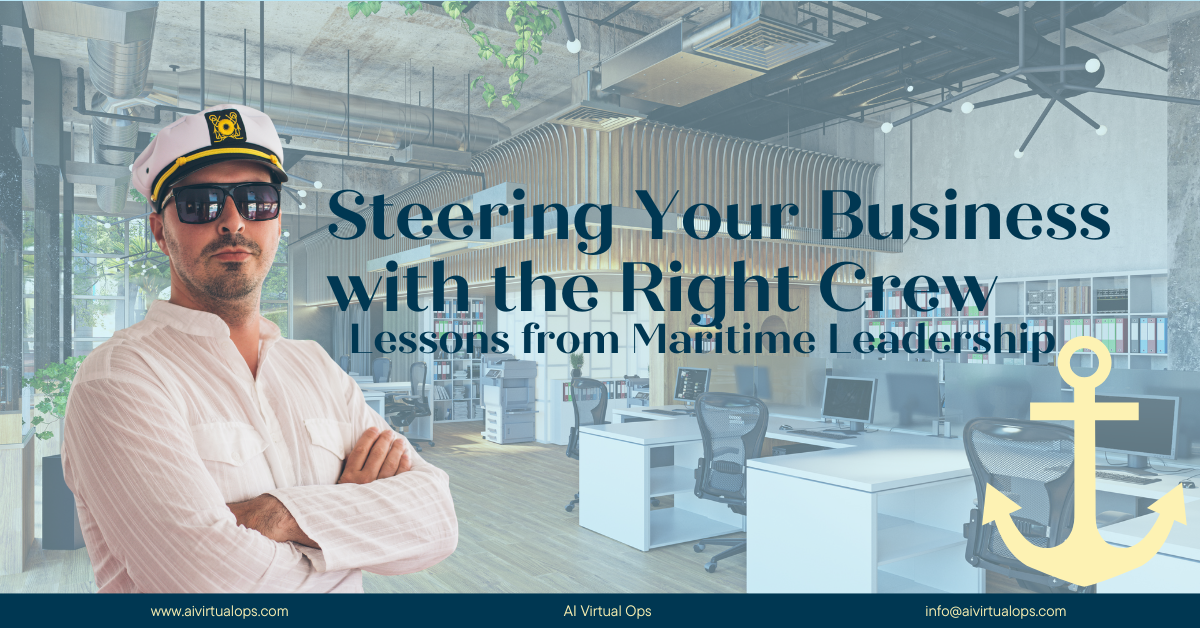
The vast, unpredictable expanse of the ocean. A powerful vessel, brimming with potential. And at its helm, a captain and crew, their lives and the success of their voyage entirely dependent on their synchronized efforts, clear communication, and unwavering trust. This, in essence, is not just the realm of seafaring, but a potent metaphor for the modern business world.
Just as a ship needs a skilled captain and a cohesive crew to navigate treacherous waters, economic storms, and the ever-shifting tides of the market, businesses require strong leadership and a dedicated team to thrive. The principles that have guided mariners for centuries offer a treasure trove of wisdom for today's entrepreneurs and business leaders.
The Captain's Call: Defining Vision and Setting Course
On a ship, the captain's role is unambiguous. They are responsible for the safety of the vessel, the cargo, and everyone on board. This translates directly to the business leader who must possess a clear vision for the company's future. What is the destination? What are the strategic objectives? Without this clarity, the business, like a ship without a compass, will drift aimlessly.
Key Maritime Leadership Lesson: Visionary Leadership is Paramount.
- Define Your Destination: Just as a captain plots a course, a business leader must define the company's mission, values, and long-term goals. This provides a compass for all decision-making.
- Communicate the Course: The captain doesn't rely on semaphore flags when visibility is low. They communicate the plan clearly and repeatedly. Similarly, leaders must effectively articulate the vision and strategy to their entire team, ensuring everyone understands their role in achieving it.
- Adaptability in the Face of Currents: The ocean is rarely still. Captains must constantly assess conditions and adjust their course. Businesses, too, operate in dynamic environments. Leaders must be agile, ready to pivot strategies when market conditions, technological advancements, or unforeseen challenges arise. This requires a willingness to learn, unlearn, and relearn.
The Crew's Contribution: Expertise, Trust, and Collaboration
A captain, however skilled, cannot steer a ship alone. They rely on a diverse crew, each member with specific responsibilities and expertise – from the navigator charting the course to the engineer keeping the engines running smoothly, and the deckhands performing essential maintenance. This underscores the critical importance of a well-rounded, competent, and collaborative team in business.
Key Maritime Leadership Lesson: The Power of a Specialized and Collaborative Crew.
- Identify and Cultivate Talent: Ships recruit individuals with specific skills. Businesses must do the same, hiring individuals who bring unique talents, experiences, and perspectives to the table. Beyond hiring, investing in training and development ensures the crew (employees) remains proficient and adaptable.
- Foster Trust and Empowerment: A captain trusts their crew to perform their duties diligently and effectively. This trust is built on competence and clear communication. In business, leaders must empower their employees, giving them autonomy and the authority to make decisions within their areas of expertise. Micromanagement, like a captain constantly second-guessing their helmsman, breeds inefficiency and erodes morale.
- The Synergy of Teamwork: The smooth operation of a ship is a testament to the seamless coordination of its crew. Every action, from hoisting sails to manning the helm, requires collective effort. Businesses thrive when departments and individuals collaborate effectively, sharing knowledge, supporting each other, and working towards common goals. Siloed operations are the equivalent of a ship whose engine room is unaware of what's happening on deck – a recipe for disaster.
Navigating Rough Seas: Crisis Management and Resilience
The sea is not always calm. Storms can arise without warning, testing the mettle of even the most experienced captain and crew. Similarly, businesses face internal and external crises – economic downturns, competitive threats, supply chain disruptions, or internal conflicts. The ability to weather these storms and emerge stronger is a hallmark of resilient organizations.
Key Maritime Leadership Lesson: Resilience is Forged in Storms.
- Preparedness is Prevention: A well-prepared ship has emergency equipment, backup systems, and a clear crisis management plan. Businesses must also proactively identify potential risks and develop contingency plans. This includes robust cybersecurity measures, diversified supply chains, and clear communication protocols for emergencies.
- Calm Under Pressure: A captain’s composure during a storm is crucial for maintaining the crew's confidence. Leaders must remain calm and decisive during crises, providing clear direction and reassurance to their teams. Panic is contagious and detrimental to effective problem-solving.
- Learning from the Experience: After every voyage, especially challenging ones, captains and crews debrief to identify lessons learned. Businesses must embrace a culture of continuous improvement, conducting post-mortems on failures and successes to refine strategies and processes. This ensures the organization becomes more robust and better equipped for future challenges.
The Importance of Communication: The Unseen Anchor
On a ship, communication is not a luxury; it's a vital necessity. Clear, concise communication ensures everyone is aware of the situation, understands their roles, and can react effectively. Miscommunication at sea can have catastrophic consequences. The same holds true for businesses.
Key Maritime Leadership Lesson: Communication is the Unseen Anchor.
- Clarity and Conciseness: Orders must be understood without ambiguity. In business, this means using clear language, avoiding jargon, and ensuring instructions are precise.
- Open Channels: The bridge needs to be in constant communication with the engine room, the galley, and every other part of the ship. Businesses need open communication channels between leadership and employees, across departments, and with external stakeholders. This fosters transparency and builds trust.
- Active Listening: A captain listens to the reports of their officers. Leaders must actively listen to their employees' concerns, ideas, and feedback. This not only provides valuable insights but also makes employees feel valued and heard.
Beyond the Horizon: The Journey of Continuous Improvement
Maritime leadership is not about arriving at a single destination and stopping. It's about the ongoing journey, the constant pursuit of improvement. Captains and crews strive to shave minutes off voyage times, improve fuel efficiency, and enhance safety protocols. Businesses, too, must embrace this ethos of continuous improvement.
Key Maritime Leadership Lesson: The Voyage is Never Truly Over.
- Embrace Innovation: Just as ship design and navigation techniques have evolved over centuries, businesses must constantly seek innovative solutions to stay ahead. This involves encouraging creativity, investing in research and development, and being open to new technologies and methodologies.
- Nurture a Learning Culture: The best crews are those that are always learning. Businesses must cultivate a culture where learning is encouraged, knowledge sharing is valued, and employees are empowered to develop new skills.
- Measure and Refine: Captains use charts and logs to analyze performance. Businesses need key performance indicators (KPIs) and data analytics to measure progress, identify areas for improvement, and refine their strategies.
In conclusion, the principles of maritime leadership offer a timeless and invaluable guide for building and steering successful businesses. By embracing visionary leadership, cultivating a skilled and collaborative crew, fostering resilience in the face of adversity, prioritizing clear communication, and committing to continuous improvement, businesses can navigate the complexities of the modern world and chart a course towards sustained success. So, take the helm, gather your finest crew, and set sail for a brighter future. The voyage may be challenging, but with the right guidance and a dedicated team, the rewards are limitless.