
The Logistics Layer Behind Every Successful Event — and Why It Needs a Dedicated Owner
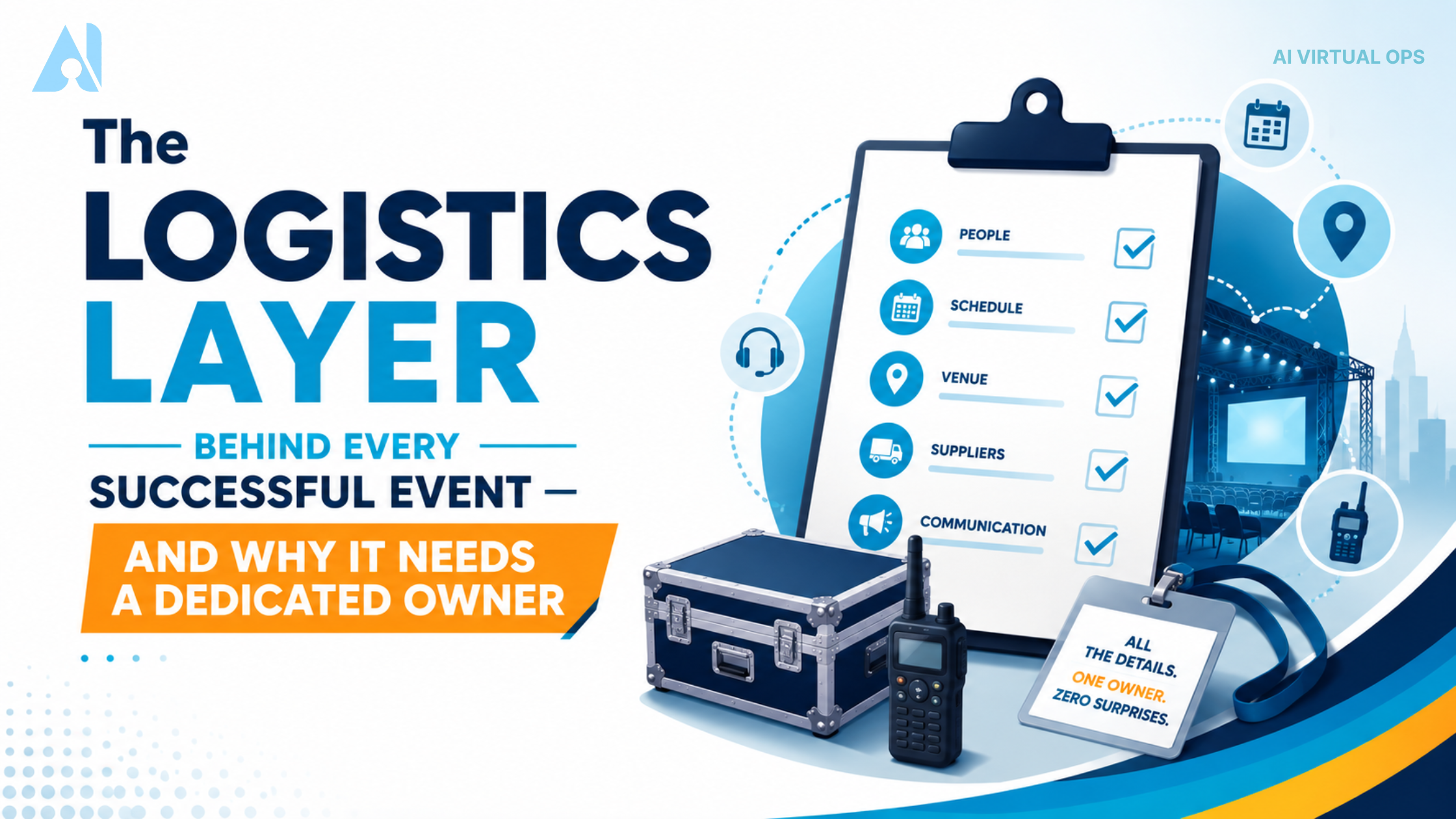
Every successful event looks effortless from the outside. Attendees walk in, sessions run on time, vendors show up when they're supposed to, and the whole thing feels seamless. What almost nobody sees is the weeks of coordination that made that seamlessness possible — and how much of it comes down to logistics work that has nothing to do with the actual content of the event.
The part of event planning that doesn't get talked about
When small business owners plan a conference, workshop, or client event, most of their attention naturally goes to the parts that feel most important: the agenda, the speakers, the guest list. But the work that actually determines whether the event runs well is almost entirely logistical — registration tracking, vendor communication, speaker scheduling, venue coordination, and the dozens of small follow-ups that keep all of it on track.
This is the layer that gets squeezed when an owner is also handling marketing, sales, and day-to-day operations in the weeks leading up to an event. Registrations go unconfirmed. A vendor contract sits unsigned longer than it should. A speaker's AV requirements never make it to the venue. None of these failures are visible until the day of the event, when they suddenly are.
What a dedicated VA actually owns in event support
A human VA trained in event and conference logistics can take on the operational layer end to end, freeing the business owner to focus on the parts of the event that actually require their presence and judgment. Typical responsibilities include:
Registration management: tracking sign-ups, sending confirmations, following up on incomplete registrations
Vendor coordination: managing contracts, confirming delivery windows, tracking payment schedules
Speaker and presenter logistics: scheduling, confirming AV and technical requirements, distributing run-of-show details
Attendee communication: pre-event reminders, logistics emails, post-event follow-up and feedback collection
Venue coordination: confirming room setups, catering counts, and timing with on-site staff
Post-event wrap-up: sending thank-you communications, compiling feedback, organizing materials for next time
Handled well, none of this is visible to attendees. That's the point. Good event logistics disappear into the experience; bad logistics become the story people tell about the event afterward.
Why this work benefits from a human, specifically
Event logistics involve a constant stream of judgment calls that don't fit neatly into automated workflows: a vendor who's suddenly unresponsive two days before the event, a speaker who needs to reschedule their session, an attendee with a special request that falls outside the standard registration flow. Each of these needs someone who can read the situation, prioritize correctly, and communicate with the right tone to the right person — a vendor gets handled differently than a nervous first-time speaker, who gets handled differently than a VIP attendee.
Automated tools can handle the predictable parts — sending confirmation emails, tracking RSVPs in a spreadsheet. They can't handle the exceptions, and events are full of exceptions. A human VA who's been briefed on the event's priorities can make the right call in the moment instead of escalating every deviation back to the business owner, which defeats the purpose of delegating in the first place.
A realistic timeline for bringing in support
Most businesses see the best results when a VA is brought into event logistics at least four to six weeks before the event date — enough time to get familiar with the vendor list, registration system, and communication templates before things get busy. Businesses that wait until the final two weeks tend to use the VA purely for last-minute firefighting, which is useful but leaves most of the potential value on the table.
For businesses that run events regularly — quarterly workshops, annual conferences, recurring client gatherings — an ongoing VA relationship pays off even more, since the VA builds institutional knowledge about vendors, past attendee feedback, and what's worked before. That knowledge compounds each time the event is run again.
The cost of getting this wrong
The failure mode here is rarely catastrophic. It's a slow accumulation of small friction points: a registration confirmation that goes out a day late, a vendor invoice that gets paid past the discount window, a speaker who feels under-communicated with and mentions it to their network afterward. None of it sinks an event on its own. All of it chips away at the polish that makes attendees want to come back next time.
What to hand off first
If you're considering bringing in event support for the first time, registration and attendee communication is usually the easiest place to start — it's high-volume, repetitive, and has a clear process to hand off. Vendor coordination and speaker logistics tend to come next, once the VA has a working understanding of how your events typically run.
Events are one of the highest-leverage places a small business can put its best foot forward with clients, partners, and prospects. The logistics layer behind that impression deserves a dedicated owner — not whoever on the team has a spare hour between now and the event date.
If your next event is on the calendar and the logistics are still sitting entirely with you, book a call to talk through what a VA could take off your plate first.