
Virtual Assistants: The Ultimate Business Productivity Hack
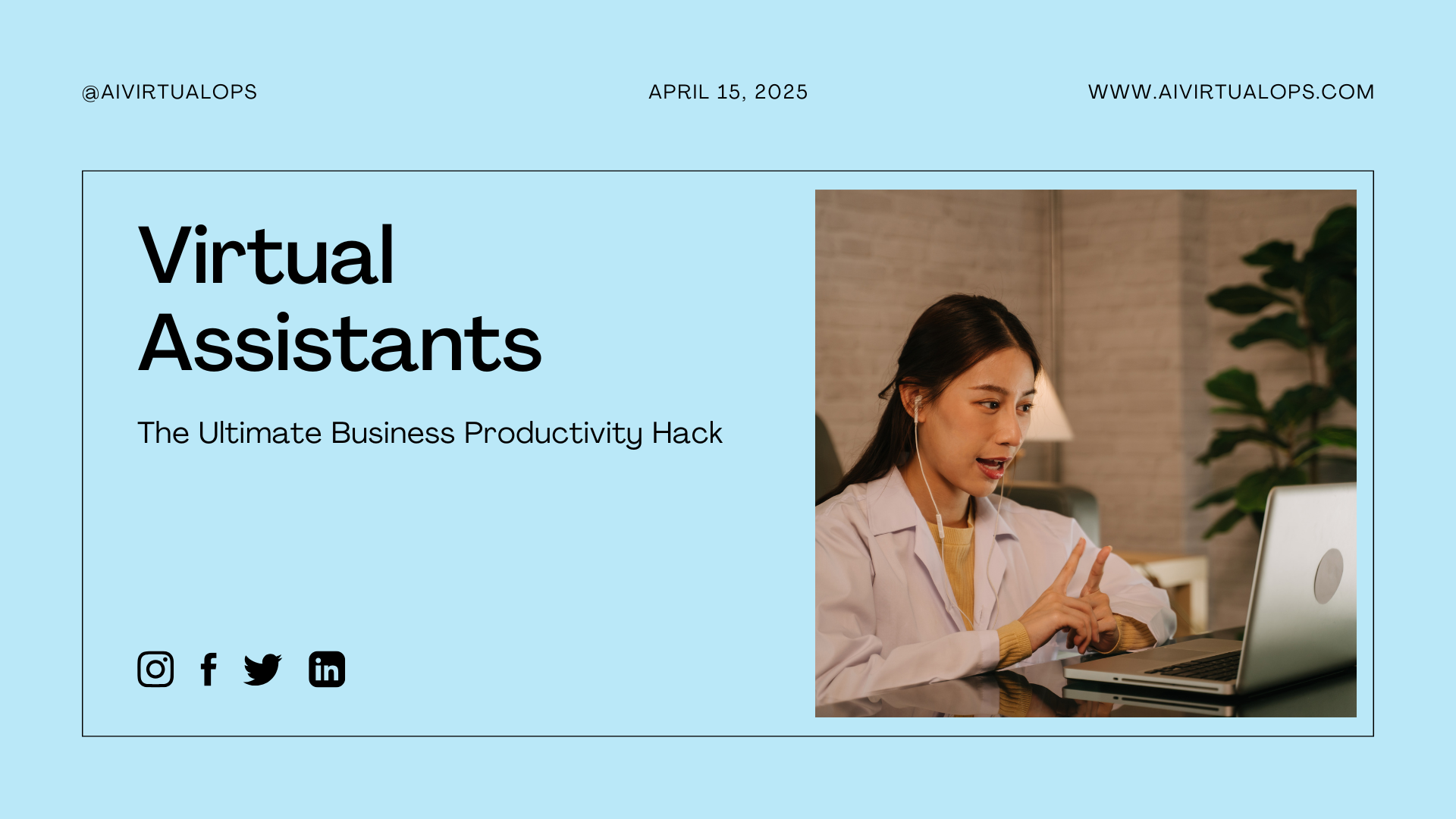
The modern workplace has undergone a seismic shift. With the rise of remote work, gig economies, and digital transformation, virtual assistants (VAs) have emerged as indispensable assets to businesses of all sizes. Whether you're a solopreneur or managing a scaling enterprise, virtual assistants can help you achieve more by doing less—smarter.
Why Productivity Matters in Business: More Than Just Getting Things Done
Productivity. It's a term thrown around in boardrooms and business blogs alike, often accompanied by trendy software recommendations and time-management techniques. But to dismiss it as merely a buzzword is to overlook its fundamental importance to the very survival and flourishing of any business. Productivity, at its core, is the engine that drives efficiency, fuels profitability, and paves the way for sustainable growth in an increasingly demanding marketplace.
While the initial definition – achieving greater output with fewer resources – provides a solid foundation, the implications of high productivity ripple far beyond simple arithmetic. It's not just about doing more; it's about doing the right things, intelligently and effectively. In today's dynamic and often volatile business landscape, where competition is fierce and consumer demands are constantly evolving, optimizing productivity is not just advantageous – it's absolutely essential for staying competitive and relevant.
Consider the tangible benefits. A highly productive business can achieve its goals faster, bringing products and services to market quicker and capitalizing on emerging opportunities before competitors. This speed and agility translate directly into a stronger market position and a greater ability to adapt to change. Furthermore, efficient resource utilization, a direct consequence of high productivity, leads to significant cost savings. By minimizing waste – whether it's time, materials, or energy – businesses can improve their bottom line and reinvest those savings in innovation, talent acquisition, or expansion. This creates a positive feedback loop, further enhancing the company's ability to compete and grow.
Beyond the immediate financial gains, a culture of productivity fosters a more engaged and motivated workforce. When processes are streamlined and workflows are clear, employees are less likely to feel overwhelmed or bogged down in unnecessary tasks. This can lead to increased job satisfaction, reduced burnout, and lower employee turnover – all critical factors in building a strong and resilient organization. A productive environment empowers employees to focus on their core responsibilities and contribute meaningfully to the company's success, fostering a sense of ownership and pride.
Moreover, high productivity allows businesses to scale more effectively. As demand grows, a company operating efficiently is better equipped to handle increased workload without a proportionate increase in resources. This scalability is crucial for long-term success and allows businesses to capitalize on growth opportunities without compromising quality or efficiency.
Productivity is far more than a metric; it's a fundamental principle that underpins the success and sustainability of any business. It's the key to unlocking efficiency, driving profitability, fostering a positive work environment, and ultimately, ensuring long-term competitiveness in a world that demands agility and continuous improvement. Ignoring productivity is akin to navigating a race with the brakes on – you might move, but you'll never reach your full potential. Embracing and actively cultivating a culture of productivity is not just a good strategy; it's a necessity for thriving in the modern business era.
What Is a Virtual Assistant (VA)?
A virtual assistant is a professional who provides administrative, technical, or creative assistance to clients remotely. VAs can handle a range of responsibilities, including scheduling, email management, data entry, customer support, and more. They're typically freelancers or work through staffing agencies, offering flexible support without the need for physical office space.
Types of Virtual Assistants and Services Offered
- Administrative VAs: Manage calendars, emails, scheduling, and travel planning
- Marketing VAs: Social media management, email campaigns, SEO, blog writing
- Technical VAs: Website updates, CRM management, data analytics
- Sales VAs: Lead generation, pipeline management, CRM updates
- Customer Service VAs: Respond to inquiries, manage support tickets, handle returns
Benefits of Hiring a Virtual Assistant
- Cost-Effective: No need for office space, benefits, or full-time salary
- Scalable: Easily adjust hours and support level as your business grows
- Specialized Skills: Access talent with specific expertise
- Global Talent Pool: Work with professionals worldwide across time zones
How VAs Improve Business Productivity
VAs allow entrepreneurs to delegate routine tasks, freeing up time for strategic initiatives. Productivity improves when high-level executives focus on growth while VAs handle operational work.
Key Areas Where VAs Boost Productivity:
- Time management and calendar control
- Streamlined communication (email & client support)
- Automating routine processes
- Research and data gathering
Case Study 1: Scaling a Coaching Business with a VA
A business coach hired a VA to manage client scheduling, billing, and social media content. In just 6 months, the coach increased client capacity by 40% and launched a new online course with the VA's help in administrative and marketing support.
Case Study 2: E-Commerce Success with Offshore Support
An online retailer outsourced customer service and order management to a team of offshore VAs. This reduced operational costs by 60% and enabled 24/7 customer support, increasing customer satisfaction and repeat sales.
Case Study 3: Streamlining a Real Estate Agency with a VA
A mid-sized real estate agency in Texas hired a VA to manage listing updates, CRM entries, and appointment scheduling. Within three months, their team reduced admin workload by 35%, giving realtors more time to focus on closing deals. The VA also created branded marketing flyers and managed client follow-ups, contributing to a 20% boost in closed leads.
Case Study 4: Launching a Podcast Brand with VA Support
A media entrepreneur launching a business podcast turned to a VA for pre-production tasks such as research, guest outreach, and scheduling. Post-launch, the VA edited episode transcripts, published show notes, and managed social media promotions. This support enabled consistent weekly publishing, helped double listener numbers in four months, and freed the host to focus on content quality and monetization.
Integrating VAs into Your Business Workflow
Seamless integration starts with clear onboarding, training, and the use of project management tools like Asana, Trello, or ClickUp. Communication platforms such as Slack or Microsoft Teams help maintain transparency and collaboration.
Cost Comparison: VAs vs. In-House Staff
Hiring a VA can cost 50–70% less than a full-time employee. You only pay for productive hours, avoiding expenses like insurance, taxes, or office equipment. This is ideal for startups and small businesses operating on lean budgets.
Common Misconceptions About VAs
- "VAs are only for startups." Truth: Corporations now use VAs for specialized projects.
- "You lose control by outsourcing." Truth: With the right systems, you gain efficiency.
- "Language or cultural barriers will be a problem." Truth: Many VAs are highly educated and fluent in English.
Tools and Technologies for Managing VAs
- Communication: Slack, Zoom, Google Meet
- Project Management: Trello, Asana, ClickUp
- Time Tracking: Toggl, Hubstaff, Time Doctor
- File Sharing: Google Drive, Dropbox
Best Practices for Hiring a Virtual Assistant
- Define your business needs and ideal outcomes
- Create a detailed job description
- Conduct interviews and test assignments
- Use contracts and NDAs for security
- Offer regular feedback and performance reviews
Industries That Benefit Most from VAs
- Coaching and consulting
- E-commerce
- Real estate
- Marketing agencies
- Healthcare professionals
Future Trends in Virtual Assistance
- Increased use of AI and automation tools
- Hybrid roles (AI + human VAs)
- Niche specialization (e.g., medical VAs, legal VAs)
- Enhanced training and certification programs
Conclusion: Make VAs Part of Your Growth Strategy
Virtual assistants aren't just a temporary fix—they're a long-term solution for sustainable productivity. By strategically leveraging VAs, businesses can reduce costs, streamline operations, and focus on scaling. They are the ultimate productivity hack in an increasingly competitive landscape.