
Will Human Virtual Assistants Be Replaced by AI? A Deep Dive into the Future of VA Services
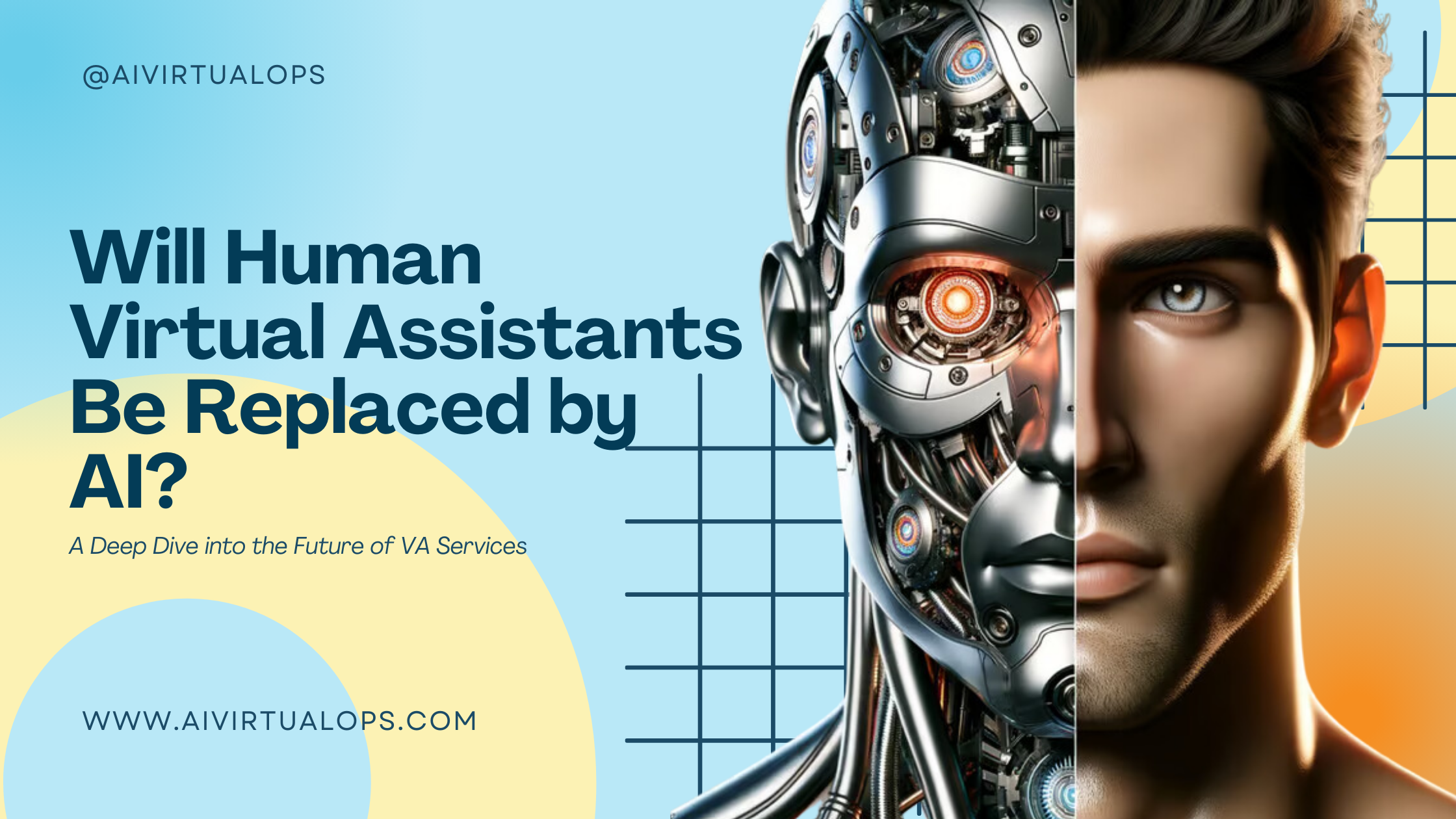
The rise of artificial intelligence (AI) has reshaped numerous industries, revolutionizing how businesses operate and interact with customers. Among the professions experiencing rapid change is the virtual assistant (VA) industry. As AI-driven automation, chatbots, and virtual support tools gain prominence, many wonder: Will human virtual assistants eventually be replaced by AI?
In this article, we explore the evolving role of human virtual assistants, the capabilities and limitations of AI-powered alternatives, and the future landscape of virtual assistance. By examining real-world use cases, industry trends, and expert insights, we’ll provide a balanced perspective on this pressing question.
The Rise of AI in Virtual Assistance
Artificial intelligence has seen remarkable advancements in recent years, enabling businesses to automate repetitive tasks, streamline workflows, and enhance customer interactions. AI-powered virtual assistants like ChatGPT, Google’s Bard, and Amazon’s Alexa demonstrate impressive conversational abilities, data processing speed, and task execution efficiency.
Key AI Capabilities in Virtual Assistance:
- Automation of Repetitive Tasks: AI can handle scheduling, email sorting, and data entry with minimal errors.
- 24/7 Availability: Unlike human VAs, AI-powered tools can provide round-the-clock support.
- Cost Efficiency: Businesses can save money by utilizing AI-driven solutions instead of hiring full-time human assistants.
While these advantages position AI as a powerful force in the VA industry, the technology is not without its limitations.
The Human Touch: Where AI Falls Short
Despite AI’s rapid evolution, human virtual assistants continue to offer unique advantages that AI struggles to replicate. Emotional intelligence, adaptability, and creative problem-solving remain strongholds of human workers. Here’s why human VAs remain indispensable:
1. Personalization and Emotional Intelligence
AI can process vast amounts of data quickly, but it lacks true emotional intelligence. Human VAs excel in understanding tone, context, and nuances, allowing them to tailor responses to clients in a way that fosters trust and deeper relationships.
2. Complex Problem-Solving and Decision-Making
While AI can follow programmed logic, it lacks the ability to think critically or make decisions based on real-world complexity. Human VAs analyze unique challenges, anticipate needs, and proactively offer solutions beyond scripted responses.
3. Creative and Strategic Thinking
Tasks requiring creativity—such as content creation, marketing strategy, and branding—are better suited to human VAs. AI can assist with idea generation, but the execution of nuanced storytelling and brand voice alignment remains a human strength.
Case Study: AI vs. Human Virtual Assistants in Customer Support
To illustrate the strengths and weaknesses of AI and human virtual assistants, let’s examine a real-world example.
Scenario: A Small Business Scaling Customer Support
A small e-commerce business decided to integrate AI-powered chatbots alongside human virtual assistants to manage customer inquiries.
Results:
- The chatbot efficiently handled FAQs, order tracking, and refunds, reducing workload for human VAs.
- However, when customers had complex or emotional concerns, they preferred speaking with human representatives who could empathize and provide personalized solutions.
- The business found the optimal approach was a hybrid model: AI for routine tasks and human VAs for high-touch customer interactions.
The Future: AI and Human Virtual Assistants Coexisting
Rather than fully replacing human virtual assistants, AI is more likely to augment their work, increasing efficiency while allowing human VAs to focus on higher-value tasks. Here’s how businesses can leverage both AI and human talent effectively:
1. Hybrid Models for Optimal Efficiency
A combined approach, where AI handles routine queries and human VAs manage complex interactions, offers the best of both worlds.
2. Training Human VAs to Work with AI
Human VAs can be trained to use AI tools to enhance their productivity, such as leveraging AI for research, content suggestions, or workflow automation.
3. Strategic Implementation of AI
Businesses should assess their specific needs before fully automating VA tasks. AI should complement, not replace, human expertise where personalized service is required.
Conclusion
While AI continues to advance, the complete replacement of human virtual assistants is unlikely in the near future. Instead, AI is transforming the VA industry by improving efficiency and automation while allowing human assistants to focus on tasks requiring emotional intelligence, creativity, and complex problem-solving.
For businesses, the key is to strike the right balance between AI-powered automation and human expertise. By leveraging the strengths of both, companies can create a more productive, cost-effective, and customer-friendly virtual assistance model.
Key Takeaways:
- AI enhances efficiency but lacks emotional intelligence and strategic thinking.
- Human virtual assistants excel in personalized service, problem-solving, and creativity.
- A hybrid approach combining AI and human VAs offers the most effective solution.
As technology evolves, businesses that embrace AI while valuing human expertise will be best positioned for success in the virtual assistant landscape.